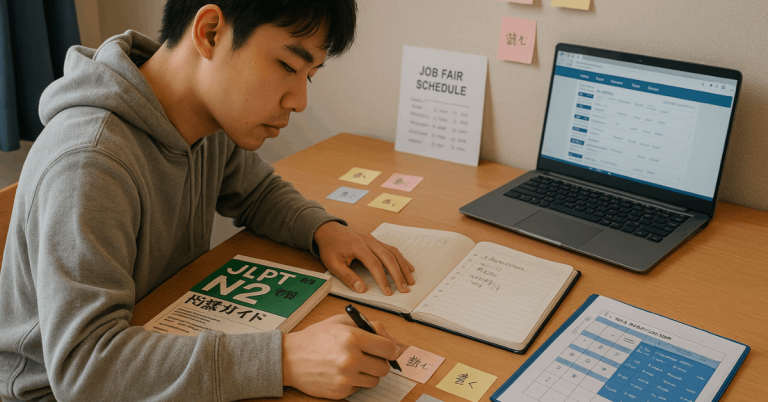
In 2025, companies in Japan offering remote interviews for jobs span the country’s biggest tech names and a long tail of SaaS, AI, and fintech innovators.
Hiring teams increasingly meet candidates over Zoom, Meet, or asynchronous video to accelerate assessments and widen the talent pool.
In practical terms, this means candidates outside Japan can still progress through screening while confirming location rules, time zones, and language expectations.

Why Remote Interviews are Now Standard In Japan’s Tech Hiring
After years of hybrid adoption, Japanese employers stabilized around repeatable remote interview flows that compress scheduling and reduce time-to-hire.
Engineering, product, and data roles leaned into structured assessments conducted online, supported by pair-programming or system-design sessions adapted for video.
Recruiters cite access to scarce skills and bilingual profiles as the biggest driver, since domestic supply alone rarely meets demand. Policy updates in 2025, including flexible work schemes and hybrid norms at major firms, continue to normalize remote screening while preserving team-based office rhythms.
Where The Roles Are: IT, SaaS, Fintech, and Consulting
Most remote interview pipelines originate in software companies, digital platforms, and corporate IT groups scaling internal products.
Expect demand across backend and mobile engineering, platform SRE, ML and data, security, design, and product management. Fintechs and payments players maintain high volume for risk, analytics, and infra profiles aligned to regulatory uptime requirements.
Consulting units and large systems integrators add remote screening for cloud and cybersecurity projects, since client sites vary and pre-deployment work can be evaluated effectively online.
Companies In Japan Offering Remote Interviews For Jobs: Quick Snapshot
Hiring managers rely on remote screening to move faster on hard-to-hire roles, then set location rules per team.
Read this snapshot to map where remote interviews are prevalent and how work location typically functions.
Treat examples as directional signals, since individual postings govern the final terms. Align expectations early to avoid surprises during offer stages.
- Marketplace, Search, and Big Tech: Mercari and Rakuten interview remotely across many tech tracks, while Google Japan conducts multi-round virtual assessments for engineering and product roles under a hybrid onsite cadence.
- Communications, Media, and Mobile: LINE and PayPay run remote technical screens for server, client, and ML roles, with hybrid attendance varying by org and function.
- SaaS and Security: HENNGE, Sansan, and Cybozu maintain remote interview steps for engineering and customer-facing positions, then apply hybrid or remote-first rules depending on team.
- AI and Automation: ExaWizards, Zeals, Autify, Colorkrew, and Givery recruit through remote interviews for AI, test automation, and platform roles, frequently noting “Anywhere in Japan” eligibility.
- News, Games, and Design: SmartNews, DeNA, CyberAgent, and Goodpatch continue to screen remotely for technical and creative roles, with work location policies tied to product cycles and collaboration needs.
Remote Interview Process Patterns In Japan
Most companies follow a four-to-six-step flow.
- Initial recruiter calls validate location, visa posture, language comfort, and compensation range.
- Online technical screens follow, using shared editors, take-home tasks, or pair sessions.
- Panel interviews mix English and Japanese depending on the team; bilingual roles flag expected proficiency in the posting.
- Final rounds typically combine behavioral questions and role-specific deep dives, then a quick reference check.
For some firms, AI interview screening on asynchronous platforms evaluates baseline communication and technical reasoning, shortening calendars for high-volume roles.
Hiring language varies. English-first environments dominate international product teams and global platform work, while customer or public-sector engagements expect stronger Japanese.
Job posts increasingly spell out policy keywords such as remote interview Japan, Japan remote hiring, “Hybrid,” “Anywhere in Japan,” “Work From Home,” and “Core Hours.”
Policy Signals To Decode In Job Posts
Many descriptions include short policy phrases. Treat the following signals as quick translation notes for your application plan.
Intro: The table below clarifies common work-location and scheduling labels found in Japanese job descriptions. Scan for “Anywhere in Japan,” “Japan only,” core hours, and visa language, since those dictate eligibility and interview scheduling windows.
Confirm the exact wording in the live posting, because internal policies shift with project needs and legal constraints.
| Policy Phrase In Post | Typical Meaning | What It Implies For Candidates |
| “Anywhere in Japan” | Remote allowed if living in Japan | Relocation to Japan required before start, remote after onboarding |
| “Hybrid (2–3 days onsite)” | Office attendance fixed per week | Plan commuting distance to Tokyo, Osaka, or team hub |
| “Japan only remote” | Remote in Japan, no overseas hiring | Overseas applications paused unless sponsorship stated |
| “Core hours 11:00–16:00 JST” | Flex outside a fixed collaboration window | Schedule interviews and stand-ups around core time |
| “Worldwide remote” | Open to overseas locations | Confirm time zone overlap, entity constraints, and payroll setup |
Applying From Overseas Without a Japanese Address
In cross-border hiring, recruiters first check document readiness, time-zone overlap, and visa feasibility.
- A focused resume outlining impact, stack depth, and production scale sets up strong technical rounds.
- Clear bullet points on cloud infra, security posture, incident ownership, or user growth offer concrete signals to Japanese hiring panels that evaluate measurable outcomes.
- When a posting lists work from anywhere in Japan or “Anywhere in Japan,” ask early whether initial start dates can be overseas, then relocation within a defined window after visa issuance.
- Language expectations should be addressed upfront. For teams that operate in English, a short note on prior global collaboration and written communication habits helps establish fit.
- When Japanese is required, list certifications or concrete usage examples such as customer meetings, compliance reviews, or contract reading.
Interviewers appreciate specificity regarding tools and artifacts used to deliver results, for example, Terraform modules, CI pipelines, on-call rotations, user research protocols, or accessibility audits.
Hiring Notes On Leading Employers
The profiles below summarize hiring focus, work patterns, and interview notes collected across public employer materials and 2025 job-board snapshots. Treat each line as a directional cue for structuring applications and questions during remote screens.
- Mercari: Remote interviews across engineering, security, data, and design, operating hybrid attendance standards while retaining flexible arrangements inside product units. Policy history highlights employee choice and nationwide location options within Japan for eligible roles.
- Rakuten Group (including Rakuten Mobile): Multi-round virtual interviews for platform engineering, telecom infra, data, and product leadership; hybrid onsite rhythm centered on Tokyo campuses. Telecom units favor candidates with Open RAN, 5G core, or network automation experience.
- LINE: Remote technical screens for backend, mobile, and ML research, followed by panel discussions; hybrid practices vary by solution area. Teams expect strong documentation habits and security literacy for consumer scale.
- Google Japan: Fully remote interview loops for technical roles remain standard, tied to a three-day onsite hybrid model once hired. System design and product sense signals carry significant weight.
- Fujitsu and IBM Japan: Remote interviews are common for cloud, security, SAP, and consulting tracks; hybrid or remote arrangements depend on client delivery. Project examples showing regulated workloads, identity governance, or large migrations land well.

Visas, Compliance, and Contract Types
Several postings permit remote interviews from abroad while stating that employment requires residence in Japan. That distinction matters because payroll, social insurance, and labor rules hinge on location.
Visa sponsorship appears frequently for highly skilled roles; however, not every remote-screened job permits overseas employment.
Companies also run hybrid models that ask for one to three onsite days weekly in Tokyo or Osaka, which constrains applicants outside commuting distance. Reading the visa and attendance lines closely prevents misunderstandings when compensation and start dates are finalized.
Bilingual Hiring in Japan
Bilingual teams continue to expand because client delivery and partner coordination benefit from cross-language coverage.
As a result, bilingual hiring in Japan grows across security, ML, and product analytics, particularly where documentation and audit trails matter.
Education and research organizations also interview remotely for technical staff and analysts, then set location rules based on lab access and data governance. For teaching and content roles, hybrid expectations shift more frequently, so confirming current norms remains essential.
Where To Find Remote-Interview Friendly Listings
Job boards focused on Japan’s tech ecosystem aggregate remote-eligible postings with clear filters for location and visa status. Japan-focused platforms highlight “Anywhere in Japan,” “Japan only,” and “Worldwide” tags that simplify the first pass on eligibility.
Recruiters at bilingual agencies also coordinate multi-stage remote processes for product and engineering roles at multinational clients.
Reading employer career pages helps validate current hybrid rules, core hours, and relocation timing, which improves planning for coding rounds and virtual onsite loops.
Hiring Focus in 2025
Throughout 2025, Japan’s remote hiring continues to focus on tech, fintech, and SaaS, where distributed collaboration is well understood, and toolchains support asynchronous work.
Candidates targeting hybrid roles in Tokyo should plan for commuting logistics and confirm core hours; those aiming for worldwide remote teams should confirm payroll entities, tax rules, and travel frequency for on-sites.
In every case, aligning expectations early during remote screens reduces friction during offer stages and improves the odds of a smooth start.
Conclusion
In 2025, remote interviews in Japan reward candidates who prepare precisely and communicate clearly. Set clear expectations on location, time zones, and language before deeper rounds begin.
Use remote screening to evidence impact, reliability, and disciplined documentation habits aligned to the posting. Close strongly by confirming the visa path, start-date window, and hybrid cadence in writing to prevent offer-stage friction.