Restaurant jobs in Japan are one of the most common entry-level work options for foreigners living in Japan.
They offer flexible hours, steady pay, and opportunities for students, residents, and visa holders with limited Japanese ability.
This guide explains how restaurant jobs work, who can apply, and what you need to prepare before applying.
Understanding Restaurant Jobs in Japan
Restaurant work in Japan follows clear routines, strict service standards, and fast-paced schedules.
Knowing how restaurants operate helps you adjust quickly and avoid common mistakes.
These jobs focus on teamwork, consistency, and customer satisfaction.
- Types of restaurants: Family restaurants, ramen shops, sushi counters, cafés, and izakaya each have different service styles and peak hours.
- Work structure: Tasks are clearly divided among hall staff, kitchen staff, and cleaning roles to keep operations efficient.
- Service standards: Politeness, speed, and accuracy are expected at all times, even during busy periods.
- Shift system: Most restaurants use rotating shifts, including morning, evening, weekend, and late-night shifts.
- Work pace: Rush hours can be intense, especially during lunch and dinner, requiring focus and coordination.
Who Can Apply for Restaurant Jobs
The roles are open to foreigners who have legal permission to work. Eligibility depends mainly on your visa type and work conditions.
- International students: Allowed to work part-time within approved hourly limits if they have work permission.
- Working holiday visa holders: Can work freely in restaurants during their stay.
- Permanent residents: No work restrictions and eligible for any restaurant role.
- Spouse or dependent visa holders: Can work part-time or full-time depending on permission status.
- Long-term residents: Allowed to work in food service without industry restrictions.

Visa and Work Eligibility Basics
Working in a restaurant in Japan requires the correct visa status and compliance with labor rules.
Before applying, you must confirm that your visa allows food service work and that you meet all legal conditions.
- Student visa: Limited to part-time work, usually up to 28 hours per week, with official work permission.
- Permission to Engage in Activity Other Than Permitted: Required for students and dependents before starting any job.
- Working holiday visa: Allows flexible work in restaurants without hourly limits.
- Spouse or long-term resident visa: Permits work in restaurants, with conditions depending on status.
- Work visas: Most standard work visas do not allow restaurant jobs unless explicitly permitted.
Language Skills and Communication Needs
Basic communication skills are needed to follow instructions and interact with customers correctly.
A clear understanding helps you perform tasks smoothly and avoid mistakes during busy shifts.
- Basic Japanese (N5–N4 level): Enough for simple greetings, orders, and kitchen instructions.
- Customer service phrases: Use polite expressions when taking orders, serving food, and handling payments.
- Listening skills: Understanding fast instructions during busy hours is essential.
- Reading ability: Needed for menus, schedules, and safety notices.
- Limited English roles: Available mainly in tourist areas or international restaurants.
Common Restaurant Job Positions
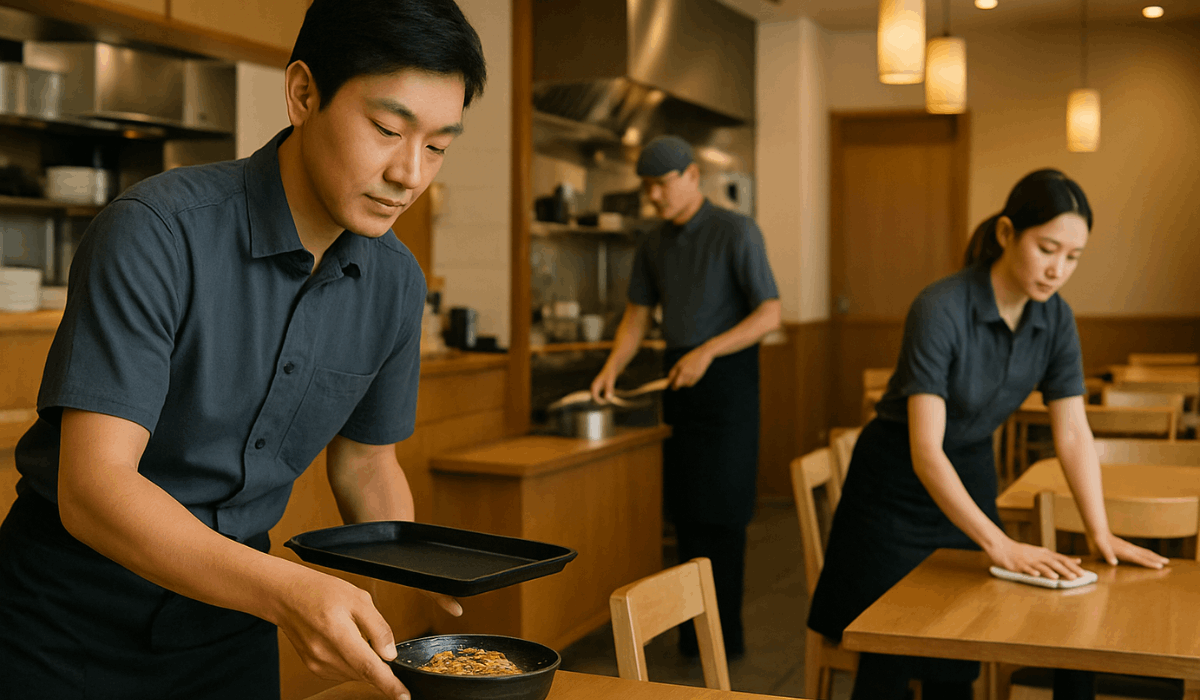
Restaurants in Japan offer several entry-level roles that do not require prior experience.
Job assignments depend on staffing needs, language ability, and shift availability.
- Hall staff: Takes orders, serves food, clears tables, and assists customers.
- Kitchen staff: Prepares ingredients, cooks simple dishes, and supports chefs.
- Dishwasher: Handles dishwashing, cleaning, and basic kitchen maintenance.
- Counter staff: Manages orders and payments at fast-food or casual dining counters.
- Cleaning staff: Maintains dining areas, restrooms, and back-of-house spaces.
Where to Find Restaurant Job Openings
Restaurant jobs in Japan are usually advertised through online platforms and local postings.
Using multiple search methods increases your chances of finding work quickly.
- Job websites and apps: Platforms like TownWork, FromA Navi, and MyNavi Baito list restaurant openings by area and shift.
- Walk-in applications: Many restaurants accept in-person applications during non-busy hours.
- Store posters: “Staff Wanted” signs are common near restaurant entrances.
- Referrals: Recommendations from friends or coworkers often lead to faster hiring.
- Dispatch and staffing agencies: These agencies place workers in restaurants for short-term or flexible roles.
How the Application Process Works
The restaurant job application process is usually simple and moves quickly.
Most employers focus on availability, legal work status, and basic communication ability.
- Submit an application: Apply online through a job site or in person at the restaurant.
- Initial contact: The employer calls or messages you to confirm availability and schedule an interview.
- Short interview: You answer basic questions about shifts, visa status, and experience.
- Document check: You present your residence card and work permission if required.
- Trial shift or start date: Some restaurants request a short trial before confirming your schedule.
Documents You Need to Prepare
Having the correct documents ready helps speed up the hiring process and avoids delays.
Employers in Japan must confirm your identity and legal work status before you start.
- Residence card: Confirms your visa type and period of stay.
- Passport: Used to verify your identity when needed.
- Work permission document: Required for students and dependents.
- My Number: Often requested for payroll and tax records.
- Bank account details: Needed to receive your salary.
Pay, Hours, and Work Conditions
Restaurant jobs in Japan offer hourly pay, set shifts, and clear labor rules.
Understanding these conditions helps you manage your schedule and income.
- Hourly wage: Usually ranges from ¥1,000 to ¥1,300, depending on location and shift.
- Work hours: Part-time shifts are common, with students limited by visa rules.
- Late-night pay: Higher rates often apply after 10:00 p.m.
- Breaks: Required for longer shifts under labor law.
- Work environment: Fast-paced, structured, and team-oriented.
What the Job Is Really Like
Restaurant work in Japan is structured, physical, and routine-based. Knowing what daily tasks feel like helps you set realistic expectations.
- Standing for long hours: Most shifts require standing for long periods with few opportunities to sit.
- Busy peak times: Lunch and dinner rushes require speed and focus.
- Team coordination: Tasks are shared and depend on clear communication.
- Repetitive duties: Daily work follows fixed procedures and checklists.
- Customer interaction: Polite behavior is expected even under pressure.
Tips to Get Hired Faster
Small actions can greatly improve your chances of getting hired quickly. Employers value reliability, readiness, and clear communication.
- Prepare a simple self-introduction: Briefly state your availability and work permission.
- Show flexible availability: Open schedules increase hiring chances.
- Apply during off-peak hours: Visit or call when staff are less busy.
- Maintain a clean appearance: Neat clothing and grooming matter.
- Respond quickly: Answer calls or messages without delay.
Common Challenges for Foreign Workers
Foreign staff may face adjustment issues when starting food service jobs. Being aware of these challenges helps you prepare and respond more effectively.
- Language barriers: Fast instructions and polite expressions can be difficult at first.
- Cultural expectations: Punctuality, hierarchy, and work etiquette are strictly followed.
- Physical demands: Long hours standing and repetitive tasks can be tiring.
- Schedule conflicts: Balancing shifts with visa limits or school schedules requires planning.
- Communication pressure: Handling customers during peak hours can feel stressful.
Final Takeaway
Restaurant jobs offer a practical way for foreigners to earn income and gain work experience in Japan.
Understanding eligibility, preparation, and daily expectations helps you avoid common problems and apply with confidence.
Review your documents, confirm your work permission, and start applying for suitable restaurant jobs in Japan today.