In 2025, Construction Worker Jobs in Japan remain a reliable path for international candidates who bring practical skills, steady work habits, and a readiness to learn basic Japanese.
Demand is strongest around large metro areas, yet nationwide infrastructure work keeps a steady baseline of hiring throughout the year.
Application success hinges on three points: a legitimate employer, the correct residence status, and clean documentation for skills, health, and taxes.

What Construction Work Typically Involves
Daily tasks depend on role and qualification level. Entry-level crews handle site preparation, material movement, basic formwork assistance, and cleanup. Licensed trades manage carpentry, plumbing, and electrical systems.
Equipment operators run excavators, loaders, and aerial work platforms. Technical staff support measurement and quality checks, while supervisors coordinate schedules, subcontractors, and safety compliance.
Career mobility is real: consistent attendance, good safety habits, and incremental upskilling frequently lead to higher day rates or promotion to foreman-level duties.
Why Demand Stays High In 2025
Japan’s workforce continues to age while redevelopment and infrastructure upgrades move ahead, keeping vacancy levels elevated. Surveys of corporate sentiment through 2025 point to persistent labor shortages that push firms to raise wages and step up mid-career hiring.
Construction benefits directly from this environment, since project timelines rely on dependable staffing and certified skills.
Rising overtime opportunities during peak months further support take-home pay, although employers must observe legal limits and premiums.
Visa Pathways For Onsite and Technical Roles
Hiring success depends on matching the job content to the correct 在留資格. Several categories commonly appear in construction hiring.
Read this brief scope statement first, then scan the table for fit. Requirements can change, so confirm details against immigration guidance at application time and again before travel.
Basic Japanese ability, proof of employment, and clean medical checks strengthen any case.
| Status (JP/EN) | Typical Use | Key Requirements | Family | PR Pathway Snapshot |
| 特定技能1号 / Specified Skilled Worker Type 1 | Onsite roles across designated construction subfields | Skills exam plus Japanese ability at roughly JLPT N4 or JFT-Basic level; employer support plan | Not permitted | Maximum 5-year stay in total; upgrade to SSW2 or change status to continue long term |
| 特定技能2号 / Specified Skilled Worker Type 2 | Advanced, higher-skill roles in select fields including construction | Higher-level skills certification and experience | Permitted | Indefinite renewals possible; eligible to sponsor family and build PR track after sufficient years |
| 技術・人文知識・国際業務 / Engineer–Specialist in Humanities–International Services | White-collar technical roles such as civil design, project engineering, BIM, or quantity surveying | University degree or equivalent professional experience aligned to job content | Permitted | Standard PR rule applies; points-based fast track possible for highly skilled professionals |
| 技能実習 / Technical Intern Training (legacy) | Training-focused programs transitioning toward Specified Skilled Worker | Structured training plan via supervising org; shifting to SSW framework in many cases | Not permitted | Not a PR route; often used as a stepping stone toward SSW exams |
Salary Benchmarks and Overtime Rules
Pay varies by role, region, and experience. Entry laborers typically earn around 200,000 to 280,000 yen per month, often rising after probation.
Carpenters, electricians, and plumbers commonly sit in the 230,000 to 380,000 yen range depending on licensing and site type. Equipment operators average roughly 250,000 to 350,000 yen.
Site inspectors and engineers usually reach 300,000 to 450,000 yen, while project managers often fall between 400,000 and 600,000 yen. These ranges reflect base pay plus common site allowances, and many employers advertise hourly equivalents during seasonal surges.
Overtime Premiums
Overtime premiums are mandated by the Labor Standards Act: at least 25 percent above base for overtime hours, at least 25 percent night allowance for 22:00 to 5:00 work, and higher rates once monthly overtime exceeds statutory thresholds.
Companies must also provide paid leave accrual, social insurance enrollment, and accurate timekeeping. Careful review of payslips matters, since allowances for transport, tools, or lodging can be itemized separately from base wages.
Benefits, Housing, and Support
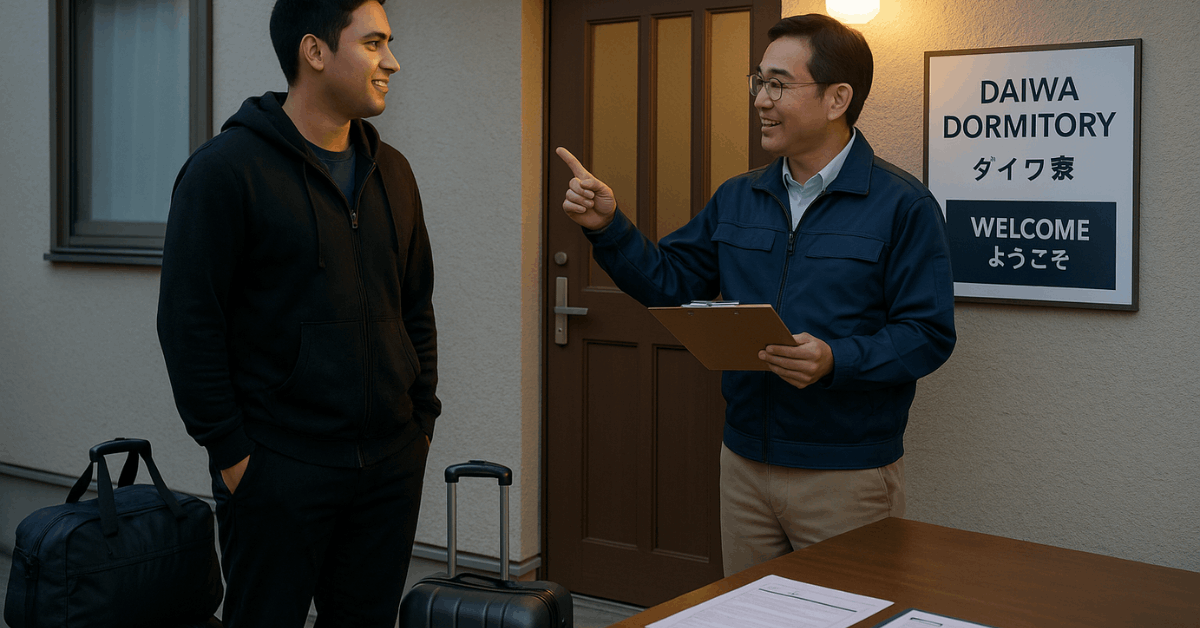
Many construction firms ease relocation costs for foreign hires. Company dorms or leased apartments stabilize commuting time and lower rent exposure, sometimes bundled with utilities.
Transport allowances remain common when dorms are not provided. Safety training is standardized under the Industrial Safety and Health Act, and site supervisors reinforce hazard prediction, lift signals, fall protection, and heat stress prevention.
Firms that hire cohorts of international workers frequently run language tutoring and cultural orientation, in addition to social events that build cohesion across crews.
How To Find A Job Fast
Targeted search beats mass applications. This short intro frames five high-yield actions, then lists them concisely. Expect to focus on legitimate employers, clear job content, and documented pay and benefits.
- Use established platforms that list roles for foreigners, such as GaijinPot Jobs, Jobs in Japan, Daijob, and LinkedIn.
- Prioritize postings that specify residence status, pay bands, overtime rules, and housing support.
- Prepare for video screening by testing audio, lighting, and a short skills demo relevant to the role.
- Contact agencies that specialize in construction placements for international staff and verify their license.
- Track application stages in a spreadsheet and follow up after one week if no response appears.
Application Documents Checklist
Solid documentation speeds screening and avoids rework. This short intro clarifies scope and then lists the essentials that employers and immigration expect.
Rirekisho in Japanese formatted correctly plus a detailed English CV for technical roles.
- Skill or trade certificates, equipment licenses, and any country-of-origin credentials translated where required.
- Health check certificate and vaccination record if the employer requests medical clearance.
- Japanese ability proof where applicable, such as JLPT N4 or JFT-Basic for 特定技能1号.
- Reference letters or prior supervisor contacts, especially for supervisory or safety-critical roles.
Interview Preparation That Matches Site Reality
Clear, concise descriptions of past work resonate most. Recruiters want to hear the project type, the daily tasks, the tools or machinery handled, and how safety rules were applied.
Demonstrating punctuality, heat and cold tolerance, and teamwork under schedule pressure matters as much as technical jargon. Short examples help: pouring and finishing a slab to spec, interpreting a simple drawing, or switching attachments on an excavator without safety violations.
Candidates for office-based technical seats should bring portfolio snapshots of drawings, schedules, or takeoff sheets that prove competency.
Workplace Culture and Safety Expectations
Hierarchy is formal, and respect for foremen and senior trades smooths daily coordination. Instructions often arrive in concise Japanese, so learning essential phrases accelerates orientation.
Safety meetings begin many shifts, and hazard prediction exercises teach crews to call out pinch points, swing radii, and fall edges. Personal protective equipment is non-negotiable on reputable sites.
Raising near-miss reports is encouraged, since it prevents repeat incidents and reflects positively during probation reviews.
Regional and Seasonal Outlook
Tokyo, Kanagawa, and Saitama host dense pipelines of rail, commercial, and residential work, which concentrates hiring and keeps rates firm. Kansai and Chubu maintain steady demand through manufacturing and logistics expansions.
Northern and rural prefectures may post slightly lower salaries, yet offer calmer commutes and lower living costs.
Peaks arrive during fair-weather months, then taper in midwinter depending on project type. Smart candidates use slower periods for certification exams or language study to unlock better roles in spring.
Step-By-Step: Getting Hired and Arriving
Clear steps reduce friction between job offer and site start. This short intro sets the order, then presents five precise actions to follow.
- Secure a written job offer that states duties, base pay, estimated overtime, lodging, and social insurance.
- Match the job content to the correct status, such as Specified Skilled Worker construction or Engineer–Specialist for technical office roles.
- Complete skills and language tests when required, then submit visa paperwork with the employer’s supporting documents.
- Arrange housing timing, airport pickup, and initial cash for transit and meals until the first paycheck.
- Attend company orientation, safety training, and medical checks, then receive site assignment and start work.
Language, Exams, and Everyday Coordination
Basic Japanese speeds up site safety and teamwork. Memorizing tool names, common commands, and hazard phrases pays off on day one.
特定技能 candidates focus on passing the sector skills exam and JFT-Basic or JLPT N4. Office-based roles benefit from industry vocabulary for schedules, drawings, and quality documentation.
Practical bilingual habits matter: labeling personal tools, keeping a pocket notebook for site terms, and politely confirming instructions when unsure.
Rights, Insurance, and Compliance
Japanese labor law sets clear floors on hours, overtime, paid leave, and night work allowances.
Employers must enroll eligible workers in social insurance, including health, pension, and employment insurance. Payslips should reflect base wage, overtime premiums, allowances, and statutory deductions.
Refusing unsafe work is permitted, and reporting routes typically include the site supervisor and the company’s safety office. Serious concerns can be escalated to labor standards bureaus or immigration consultation desks that assist foreign workers.
Housing, Cost Control, and Daily Life
Company dorms remain popular for first-year staff since they cut commute stress and reduce upfront deposits. Shared apartments with coworkers offer an alternative when privacy matters more than price.
Buying a basic set of cold-weather and rain gear early prevents missed shifts in bad conditions. Packing meals saves money on long days, and many crews coordinate bulk purchases of gloves, masks, and consumables.
Stable attendance and clean time cards often unlock regularization, higher allowances, or transfer to better-paying sites.
Pathways To Permanent Residency
Permanent residency typically requires around ten consecutive years in Japan plus a record of taxes and stable income. Highly Skilled Professional points can shorten the timeline substantially for technical staff in design or engineering seats.
For onsite roles, Specified Skilled Worker Type 1 is a fixed-term status, while Specified Skilled Worker Type 2 allows indefinite renewals and family accompaniment once advanced skills are proven.
Long-term planning should combine language study, continuous social insurance enrollment, and transparent tax filings.
Where To Search and What To Prioritize
Reputable platforms consistently surface construction jobs in Japan for foreigners, including GaijinPot Jobs, Jobs in Japan, Daijob, and LinkedIn.
Priority goes to postings that name the exact residence status, disclose base hourly or monthly rates, state typical overtime, and mention accommodation.
Agencies that specialize in construction help candidates schedule exams for Tokutei Ginou construction, prepare documents, and practice interview responses. Filtering for listings that mention dorms or relocation support speeds placement for those arriving from overseas.
Last Thoughts
Careful alignment of skills, residence status, and documentation is the fastest route into stable site work.
Japan’s tight labor market and regulated overtime premiums support solid income, and structured training helps newcomers adopt local safety standards quickly.
Consistent attendance, basic Japanese, and steady upskilling move candidates from helper roles to licensed or supervisory seats. A measured plan converts short-term contracts into repeat assignments and, eventually, a durable career in a high-demand sector.